

Can an industrial dryer be used for drying minerals?
Leave a message

Hey there! As an industrial dryer supplier, I often get asked this question: Can an industrial dryer be used for drying minerals? Well, let's dive right into it and find out.
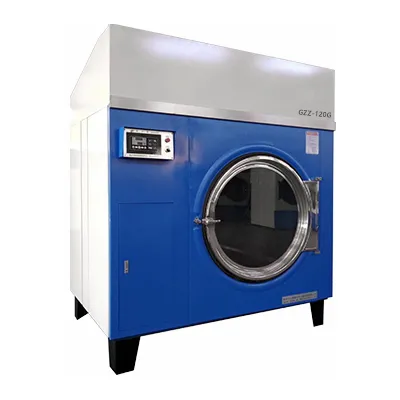
First off, let's talk a bit about industrial dryers. We've got different types, like the Industrial Gas Dryer, Laundry Tumble Dryer, and Drying Tumbler. These dryers are designed to handle various materials, but minerals have their own unique characteristics.
Minerals come in all shapes, sizes, and compositions. Some are hard and dense, while others are more porous. The moisture content in minerals can also vary greatly. For example, some minerals might have a high water content due to their formation process or the environment they're mined from.
Now, can industrial dryers handle these minerals? The answer is, it depends. Some industrial dryers are well - suited for drying minerals, while others might not be the best fit.
Let's start with the advantages of using an industrial dryer for minerals. One of the biggest benefits is efficiency. Industrial dryers are built to handle large volumes of materials. If you're in the mining industry, you're likely dealing with tons of minerals every day. An industrial dryer can quickly reduce the moisture content of these minerals, which is crucial for further processing.
For instance, in the case of coal, drying it can improve its energy efficiency. When coal has a lower moisture content, it burns more efficiently, which means less waste and more energy output. An industrial dryer can help achieve this by removing the excess water.
Another advantage is consistency. Industrial dryers can provide a uniform drying process. This is important because in mineral processing, having a consistent product quality is key. Whether you're producing iron ore pellets or drying salt, a consistent moisture level ensures that the final product meets the required standards.
However, there are also some challenges when using industrial dryers for minerals. One of the main issues is abrasion. Minerals can be very abrasive, especially hard ones like quartz. The constant movement of these abrasive minerals inside the dryer can cause wear and tear on the dryer's components. This means that the dryer needs to be made of durable materials that can withstand this abrasion.
Another challenge is the chemical reactivity of some minerals. Some minerals might react with the dryer's components or the drying medium (such as hot air). For example, certain sulfide minerals can react with oxygen in the air during the drying process, which can lead to the formation of sulfur dioxide, a harmful gas. In such cases, special precautions need to be taken, like using an inert gas as the drying medium.
Let's take a closer look at different types of industrial dryers and their suitability for drying minerals.
Rotary dryers are quite popular in the mineral industry. They work by rotating a large drum, which allows the minerals to tumble and come into contact with the hot air or gas flowing through the drum. Rotary dryers are good at handling large volumes of minerals and can provide a relatively uniform drying. However, as mentioned earlier, the abrasion issue needs to be addressed. The interior of the drum should be lined with a wear - resistant material to prevent damage.

Fluidized bed dryers are another option. In a fluidized bed dryer, the minerals are suspended in a stream of hot air, which creates a fluid - like state. This type of dryer is great for drying fine - grained minerals because it provides excellent heat transfer and a short drying time. But it might not be suitable for very large or heavy minerals as they might not be easily fluidized.
Spray dryers are mainly used for drying liquid or slurry - like mineral products. For example, in the production of some ceramic powders, the raw materials are in a liquid form. Spray dryers atomize the liquid into small droplets and dry them quickly using hot air. This results in a fine powder product.
So, when choosing an industrial dryer for drying minerals, you need to consider several factors. First, you need to know the properties of the minerals, such as their size, density, moisture content, abrasiveness, and chemical reactivity. Based on these properties, you can select the most appropriate type of dryer.
You also need to think about the drying capacity you require. If you have a large - scale mining operation, you'll need a dryer with a high throughput. On the other hand, if you're dealing with a small - scale mineral processing plant, a smaller - capacity dryer might be sufficient.
Cost is another important factor. Industrial dryers can be a significant investment. You need to consider not only the initial purchase cost but also the operating costs, such as energy consumption and maintenance. For example, a dryer that uses a lot of energy might not be cost - effective in the long run, even if it's relatively cheap to buy.
Maintenance is also crucial. As we've discussed, the abrasion and chemical reactivity of minerals can cause damage to the dryer. Regular maintenance is needed to ensure the dryer operates efficiently and has a long service life. This includes inspecting and replacing worn - out parts, cleaning the dryer, and checking the performance of the control systems.
In conclusion, industrial dryers can be used for drying minerals, but it's not a one - size - fits - all solution. You need to carefully evaluate the properties of the minerals, the type of dryer, and your specific requirements. If you're in the market for an industrial dryer for mineral drying, I'd be more than happy to help you find the right solution.
Whether you're looking for a Industrial Gas Dryer, Laundry Tumble Dryer, or Drying Tumbler, we've got a range of options to suit your needs.
If you're interested in learning more about our industrial dryers and how they can be used for your mineral drying needs, feel free to reach out. We can have a detailed discussion about your specific situation and come up with the best solution for you. Let's work together to find the perfect industrial dryer for your mineral processing operations.
References:
- Mineral Processing Handbook, various editions
- Industrial Drying Technology textbooks
- Research papers on mineral drying processes from industry - related journals


